Reading time: 12 min
Every buyer eventually asks the same question about nearshore developer rates: the engineer earns roughly $4,500 a month, so why is the invoice $9,000? It is a fair question, and the answer is not simply margin.
- 6
- Cost layers hidden inside one monthly fee
- 20-50%
- Typical vendor margin range, embedded in the rate
- 2
- Markets that price close at senior level
- 3
- Engagement models, three different premiums
This article is about nearshore developer rates as they appear on an invoice, rather than about salaries. If you want the salary benchmarks themselves, we cover Poland against the US in our 2026 developer salary guide and the year-one cost of hire in how much cheaper Polish developers actually are. What follows is the part neither of those explains: how a vendor rate is built, and how to read it against a US employment cost without comparing the wrong two numbers.
What is actually inside nearshore developer rates
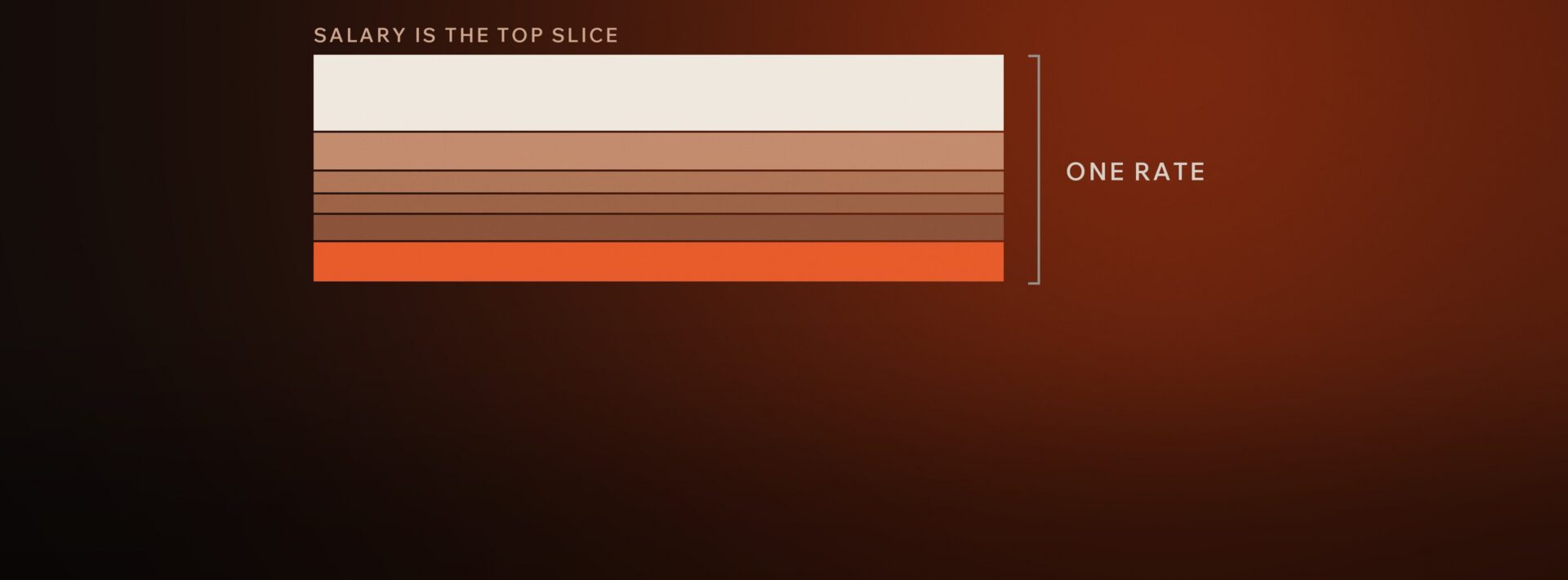
A monthly managed fee is not a salary with a markup bolted on. It is a bundle, and six things sit inside it.
| Layer | Who pays it in a US hire |
|---|---|
| Developer gross salary | You, visibly |
| Employer social contributions | You, as a separate payroll line |
| Equipment and software | You, as capex or a monthly cost |
| HR, payroll and legal admin | Your HR function or an outsourced provider |
| Recruitment and vetting | You, as an agency fee or internal recruiter time |
| Account management and replacement cover | Nobody. You absorb the risk yourself |
Swipe the table sideways to see all columns.
The employer contribution layer is worth understanding specifically, because it is invisible on a nearshore invoice and unavoidable on both sides. In Poland, employer social security contributions commonly total somewhere around 20 percent of gross salary, plus a smaller mandatory contribution to employee capital plans. In Portugal, the employer rate commonly runs somewhat higher, with additional smaller contributions for accident insurance and wage guarantees. Confirm current statutory rates before you build a model on them, since both change.
Nearshore developer rates: where the margin actually goes
Vendor markups on developer cost commonly fall somewhere between 20 and 50 percent, embedded in the rate rather than itemised. That is a wide band, and where a given vendor sits inside it tells you something about their model.
Recruitment and vetting
The largest single cost in most vendor margins, and the one that varies most. A vendor who screens ahead of demand carries that cost as inventory. A vendor who recruits reactively carries it per engagement, and passes the delay to you as onboarding time.Legal and compliance in the engineer's country
Employment contracts, contractor classification, data protection obligations. Real work that would otherwise land on your legal team, in a jurisdiction they do not practise in.Replacement cover
Rarely priced explicitly and genuinely valuable. When someone leaves mid-engagement, the vendor absorbs the gap. In a direct hire that gap is yours, along with the search.Account management
The layer with the widest quality variance between providers, and the easiest to check before signing. Ask who you call at week six when something is not working.
A useful read on a rate: a vendor noticeably below the market band is usually economising on the first item. The vetting you did not pay for is the vetting you will do yourself, inside your own sprint. ITDS TalentHub exists partly to make that layer visible, letting you see the pre-vetted pool directly rather than taking a recruiter's word for what screening happened.
Three engagement models, three different premiums
Nearshore developer rates move for the same engineer depending on how much risk the vendor is holding.
| Model | Premium | What the vendor absorbs |
|---|---|---|
| Staff augmentation | Baseline | Employment, replacement, compliance |
| Managed team | Modest premium | The above, plus delivery coordination |
| Project-based | Highest premium | The above, plus scope and outcome risk |
For most companies extending an existing engineering team, augmentation is the efficient choice once the engagement runs six months or longer and your team has the bandwidth to integrate people. You keep control of the work and pay for capacity rather than for coordination you are already doing. Where that bandwidth does not exist, the managed team premium buys something real, and we work through that trade in our piece on the managed team model.
As rough monthly anchors for European nearshore in 2026: junior to mid-level talent commonly lands somewhere around $4,000 to $6,500 a month, and senior engineers somewhere around $7,000 to $14,000 on a full-time equivalent basis. Treat those as directional and confirm against live quotes, since the band is wide and moves with stack and seniority.
Nearshore developer rates in Poland against Portugal
Most cost comparisons treat nearshore Europe as one market. It is at least two, and at senior level they price closer together than buyers expect. Polish senior developers commonly reach somewhere around $55,000 to $60,000 annually on employment contracts. Portuguese seniors commonly fall somewhere around $50,000 to $65,000. The ranges overlap, and neither country consistently undercuts the other.
Stack and ecosystem, mostly. Poland brings depth in enterprise backend, fintech infrastructure and quantitative work, backed by a large regional talent pool. Portugal brings a Western European business profile and proximity to that ecosystem, which matters when the project sits inside Western European systems or teams. On timezone, both give US East Coast teams several hours of morning overlap, with the exact window shifting on each side with daylight saving.
The practical consequence for a buyer: choosing a country on rate alone is optimising a variable that barely differs. Choose on which ecosystem the work belongs to, then negotiate the rate.
Comparing nearshore developer rates to a US hire, correctly
The comparison only works if both sides are bundled the same way. Three steps get you there.
- Take the US base salary and load it. Payroll taxes, state unemployment, health insurance, retirement match, equipment, recruiting fee. The total employer burden is commonly cited at roughly 25 to 45 percent above base.
- Annualise the vendor rate as it stands. No additions. Employer contributions, equipment, HR and recruitment are already inside it, which is the whole point of the model.
- Add first-year effects to both, separately. Recruiter fees and ramp-up inflate a US first year. Onboarding lag inflates a nearshore first quarter. Neither belongs in a steady-state comparison, and both belong in a first-year budget.
Done that way, a fully loaded senior US engineer commonly lands well into six figures annually, while the same profile through a European vendor commonly runs meaningfully less all-in. Across a team of several seniors the gap can fund an additional hire, which is the version of this argument worth putting in front of a CFO, because it is expressed in headcount rather than in percentages.
For a city-level view of the same question across European markets, see our comparison of software development costs across Europe.
When the math works, and when it does not
The advantage in nearshore developer rates is real and it is conditional. It shows up most clearly when you are hiring two or more engineers at mid-level or above, when your team sits in Eastern or Central US time and can use the morning overlap, when the engagement runs six months or longer, and when someone internally has bandwidth to integrate external engineers.
That is worth saying plainly, because it is the scenario buyers most often try first and the one most likely to disappoint. For sustained growth across multiple roles and seniorities, total developer cost reductions against fully loaded US hiring are commonly cited somewhere in the 40 to 60 percent range, with the width of that band reflecting role, engagement model and how comprehensively overhead gets counted.
Frequently Asked Questions
What does a nearshore vendor's monthly rate actually include?
Why is the vendor rate so much higher than the developer's salary?
Is Poland or Portugal cheaper for senior developers?
How do staff augmentation, managed team and project pricing differ?
When does nearshoring not make sense financially?
Reading nearshore developer rates properly
The mistake that derails most nearshore cost conversations is comparing a bundled vendor rate to an unbundled salary and calling the gap markup. Once you load the US side properly and leave the vendor side alone, the comparison gets simple, and the answer for teams scaling past a single hire is consistent.
ITDS Nearshore works across both Poland and Portugal, so the country choice can follow the work rather than the rate card. More on the range of engagements in what we offer, and on where senior pay is heading in specialised roles, our look at the AI engineer salary arms race.
Want a real number instead of a range?
Book a call and we'll run the comparison for your specific headcount plan and show you where the savings actually land.
Book a consultation