Reading time: 12 minutes
ITDS Nearshore · Updated 23 September 2026
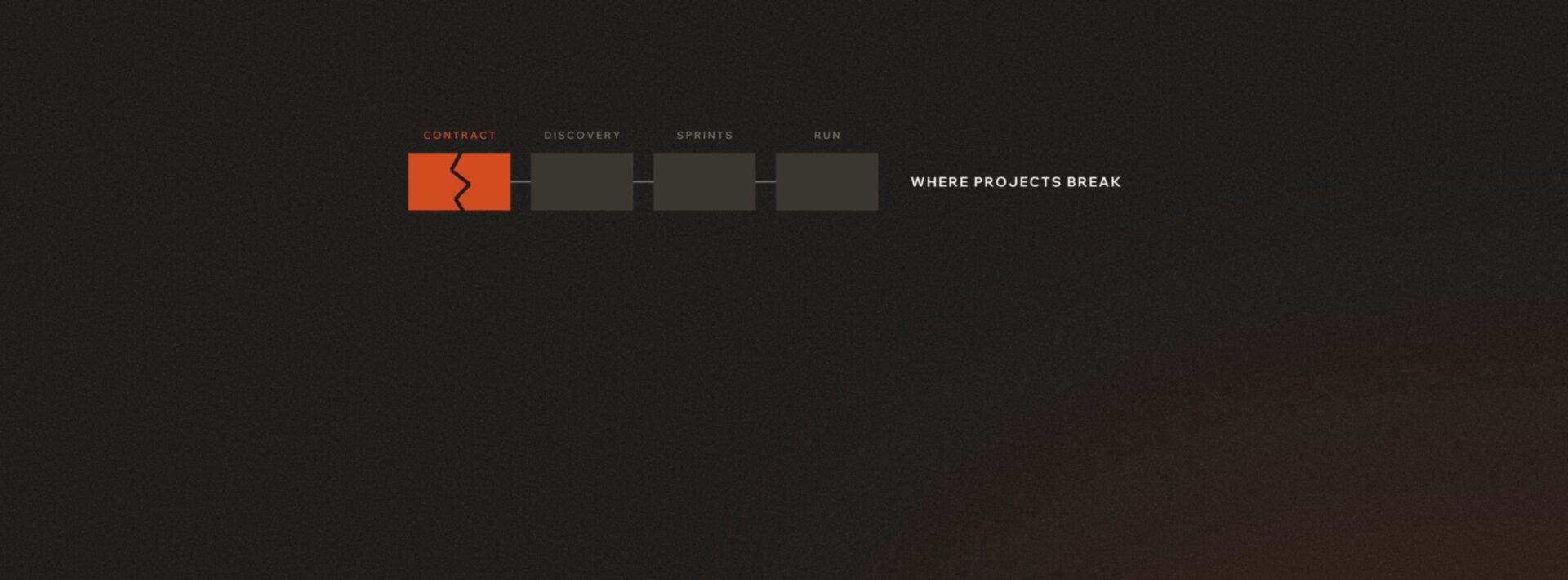
Software development outsourcing means handing a defined project or product to a vendor who owns delivery against a contract. Most outsourcing problems start in that contract rather than in the code: vague scope, the wrong pricing model or no agreed reporting. ITDS therefore shows the delivery process, governance and pricing model before work begins.
Buyers usually judge software development outsourcing by the vendor's engineers. That matters, yet in practice it is rarely where projects go wrong. Far more often the trouble is written into the contract months before the first commit, in a scope nobody tested or a price model that rewards the wrong behaviour. This page shows how we avoid that, delivered from our nearshore software development hubs in Poland and Portugal.
| 600+consultants on live client projects | 60+international clients, incl. Fortune 500 | 10+ yearssupporting international clients | 3pricing models, chosen per project |
Source: ITDS IT Talent Trends 2026, based on 3,500+ recruitment conversations in 2025.
Outsourcing, augmentation or a dedicated team: which fits?
Software development outsourcing fits when you can describe what you want delivered and would rather not manage the people who build it. If you need engineers inside your team, staff augmentation is the better model. If you need a standing team for a year or more, a dedicated team usually wins.
| Outsourcing | Staff augmentation | Dedicated team | |
|---|---|---|---|
| You provide | Goals and acceptance criteria | Daily direction | Priorities and backlog |
| Vendor owns | Delivery and the result | Recruitment and employment | The team and its continuity |
| Works best for | Defined projects and products | Filling specific roles | Long-running product work |
Read more about IT staff augmentation and dedicated development teams.
Why does software development outsourcing fail at the contract stage?
Software development outsourcing fails at the contract stage because that is where risk gets assigned, often without anyone noticing. Five gaps appear again and again in projects that go wrong. Each one, however, is cheap to close before signing and expensive to close afterwards.
- Scope written as features, not outcomes. A list of screens says nothing about performance, security or who decides when a feature is done.
- Fixed price on an untested scope. As a result, the vendor protects its margin with change requests and the relationship turns adversarial.
- No agreed reporting. Without defined demos, metrics and risk logs, you therefore learn about problems only when the deadline slips.
- No exit plan. Documentation, knowledge transfer and code ownership are left for the end, when you have lost your bargaining power.
- One key person. Similarly, if a single engineer holds the architecture in their head, their departure becomes your crisis.
How does ITDS deliver an outsourced project?
We deliver outsourced projects in four stages, and you see each stage's output before the next one starts. In short, the goal is no surprises that the contract could have prevented.
- Discovery. First, we test the scope with you, agree acceptance criteria and identify the risks that should shape the price model.
- Team assembly. We staff the team from Poland, Portugal or both, and you meet the key people before they start.
- Delivery in sprints. Each sprint ends with working software you can review yourself.
- Governance. A regular steering meeting covers budget, risks and decisions, and documentation is kept current as the project runs.
Planning a project and unsure which model fits? Send us your hardest role or your hardest project, and we will be honest about the fit.
When is outsourced software development the wrong choice?
Outsourced software development is the wrong choice when you cannot describe the result you want, or when the product is your core advantage and changes every week. In both cases the contract would have to be rewritten so often that you are really buying people, not delivery.
- The scope is still an idea. In that case, run a short discovery first, or start with a dedicated team that can shape the product with you.
- You need to keep the knowledge in-house. If the system is your competitive edge, staff augmentation keeps the know-how inside your team.
- Nobody on your side can accept the work. Outsourcing still needs an owner who reviews demos and signs off releases.
- The deadline is fixed but the budget is not. Then IT outsourcing on a fixed price will only move the argument into change requests.
Which pricing model suits software development outsourcing?
Three pricing models cover almost every outsourced project. The right one depends on how well the scope is known, because each model puts the risk of the unknown on a different side of the table.
| Time and materials | Capped time and materials | Fixed scope | |
|---|---|---|---|
| How it works | You pay for time worked | Time worked, up to an agreed ceiling | One price for an agreed scope |
| Best when | Scope will change | Scope is mostly known, details are not | Scope is fully specified and stable |
| Risk of the unknown sits with | You | Shared | The vendor, priced into the quote |
| Watch out for | Weak reporting | A ceiling set too low | Change requests |
In practice, many projects start on time and materials during discovery and move to a capped or fixed model once the scope is proven.
What drives the cost of outsourced software development?
The cost of outsourced software development depends less on the country than on four decisions you make before the first sprint. The country sets the base rate, yet these four factors decide how many hours the project actually consumes and how much risk the vendor prices in.
- Scope clarity. A tested scope lets the vendor quote tightly, whereas a vague one forces a risk premium.
- Seniority mix. Senior engineers cost more per hour but usually fewer hours; a junior-heavy team is cheaper on paper only.
- Pricing model. Fixed scope moves risk to the vendor, who prices it in; time and materials keeps it with you.
- Regulatory load. Screening, access control and audit evidence add real work in banking and insurance, so budget for them from the start.
For current market rates of engineers in Poland, see the rate table on our IT staff augmentation page; a vendor quote for delivery sits above those numbers.
Which quality gates and reports should you receive?
You should receive reporting that lets you judge progress without trusting anyone's optimism. Ask for these five things in the contract, and also make sure each one has a named owner and a frequency.
- Working software at the end of every sprint, in an environment you can access.
- Budget burn against plan, so you see overruns weeks before they land.
- Quality measures such as test coverage, code review and open defects.
- A risk and decision log that records what was decided, by whom and why.
- Current documentation, updated as part of the work rather than at the end.
Managed services: how does a 24/7 run model work?
Some clients want more than a delivered project, because they also want someone to run it afterwards. In a managed service the vendor keeps the system working in production, around the clock where the business needs it, against service levels agreed in the contract rather than hours billed.
- Monitoring and incident response, with agreed response times for each severity level.
- Change and release management, so production changes follow a documented, reviewable path.
- Continuity of people, because the engineers who built the system usually stay to run it.
- Regular service reviews covering incidents, risks and the backlog of improvements.
Case: CreditPlus, a bank built and run
CreditPlus is the clearest example of software development outsourcing that continues into a managed service. ITDS engineers helped build a German retail bank from scratch, covering payments, KYC, cards and transfers, and the same nearshore team is set up to run it around the clock. The short version: ITDS helps a German bank run every day.
What makes the case relevant beyond banking is the order of events. The delivery process, governance and run model were agreed at the start, so moving from building to running did not require a new contract or a new team.
Software development outsourcing checklist: six questions before you sign
Use these six questions with any vendor, including us, before the contract is signed. If a vendor cannot answer one of them clearly and in writing, then treat that silence as the answer.
- Who defines when a feature is done, and where is that written down?
- Which pricing model are you proposing, and why does it suit this scope?
- What will I see at the end of each sprint?
- Who are the three people this project depends on most, and what happens if one leaves?
- How are code, documentation and knowledge handed over at the end?
- Which similar project have you delivered, and can I speak to that client?
Software development outsourcing: frequently asked questions
It is handing a defined project or product to an external vendor that owns delivery against a contract, including the team, the process and the result.
It depends on the scope. Time and materials suits changing scope, fixed price suits a fully specified one, and capped time and materials sits in between.
Most failures trace back to the contract: vague scope, a pricing model that does not fit, missing reporting, no exit plan or dependence on one key person.
Yes. We run systems as a managed service, as we do for CreditPlus, a German retail bank.
Our delivery teams work from Poland and Portugal, under EU law and in European working hours.
Sometimes, but price is the wrong test. Outsourcing moves recruitment, management and delivery risk to the vendor, and that is what you pay for.
Tell us what needs to be delivered, by when and under which constraints. We will propose a model and a team, with the risks written down, on a call.
Describe your project